 Emeka Moses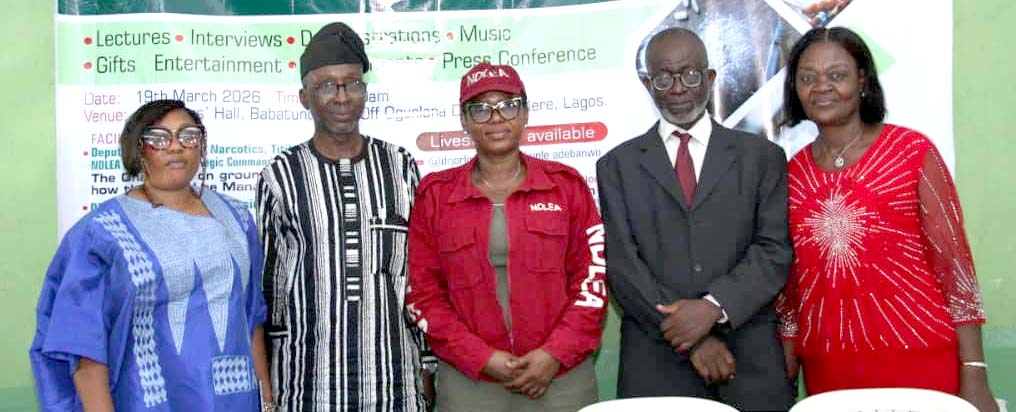
From left: Assistant District Governor, Rotary International, Elohor; Prof Niyi Osuntoki (LUTH); Mrs. Titi Ogunluyi (NDLEA); Dr Kunle Adebanwo, Founder,Cortex Medical Support Foundation, and Mrs Remi Dada, Nursing Services, LUTH during an awareness campaign in Surulere, Lagos.
Considering the effect of drug abuse in our environment, especially among the youths, a non profit and non governmental organisation, Cortex Medical Support Foundation (CMSF), experts had called for proper rehabilitation, empowerment of victims addicted to substances to save their future, family and society at large.
Speaking in a programme organised by CMSF on free medical consultation, creating awareness on the theme: “Enough is Enough, Say No To Drug Abuse”, the founder, Dr. Adekunle Adebanwo, said, “CMSF was formed to address the material, social, emotional and other needs of special children and their families. Along the line the Board of Trustees identified the unfortunate proliferation of individuals with mental challenges as a result of drug abuse and addiction. So, we decided to tackle the issue by creating public awareness”.
He said, “The public awareness is targeting all Nigerians, particularly the vulnerable youths who unknowingly are grossly becoming victims. “Yes,we know many of the victims are already hooked to the substances but we want to create awareness for the young ones who are very exposed and may unknowingly become victims. Interestingly, older individuals are vulnerable particularly the depressed, poor, unemployed, hungry, jilted are also exposed etc.”
Continuing, Dr. Adebanwo said, “We want to create awareness that drug addiction is progressing to epidemic proportions. We want to help the addicts and vulnerable ones to get off the hook and be economically empowered by getting some job after being treated. It is a big task but we know that it is achievable”.
In addition, Dean, Faculty of Basic Medical Sciences, College of Medicine, University of Lagos. Prof Niyi Osuntoki said, “People abuse drugs for various reasons. For the younger ones, it could be their friends. And there are other reasons. Like I mentioned, drugs are everywhere, drugs are both good and bad. We use drugs to treat diseases, we use drugs to cure ailments, we use drugs to prevent diseases. The challenge is when people take some of these prescription drugs in the wrong way. What do I mean in the wrong way? If you take medication that is not prescribed for you, that’s drug abuse”.
He said, “If you take what we call recreational drugs, which are drugs that are taken for social, in quotes, purposes, that’s drug abuse. And so, what triggers drug abuse? Some younger people say it’s because they were feeling low, and that is why they are taking the drugs to feel high. That’s escapism. It is dangerous and can lead to what you never bargained for, because the more you take, the more the potential for those side reactions increases. And some of them are negative reactions”.
Also, Mrs Remi Dada who worked with Lagos University Teaching Hospital, said, “To cope with this menace of substance use, everybody, all hands must be on deck. Parents have to be vigilant, observant. A child that is upcoming, free, discussing with everybody, all of a sudden starts isolating himself. Or you discover that your materials, your valuables are disappearing in your house. Don’t keep quiet. Something is happening that you have not discovered. And be your children’s friends”.