


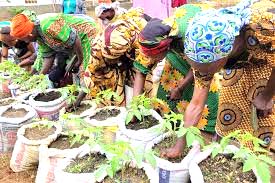
Stakeholders in Kaduna said that cooperative farm hubs, mentorship programmes and improved access to land, are practical measures to accelerate women’s participation in agriculture.
They highlighted these measures at a policy dialogue organised to mark the 2026 International Women’s Day (IWD) in Kaduna.
The discussions at the dialogue were focused on strategies for implementing the Kaduna State Gender Policy in Agriculture 2026-2030.
The event was organised under the Policy and Agricultural Systems Strengthening (PASS) project, supported by Alliance for a Green Revolution in Africa (AGRA), with technical assistance from Synergos
The Commissioner for Youth Development, Gloria Ibrahim, said agricultural hubs where women farmers operate collectively, could significantly reduce production costs and boost productivity.
According to her, farm clusters allow women to pool resources, access land collectively, and benefit from shared inputs, equipment and extension services.
“When women cultivate farmland together in a hub, they are able to reduce production costs and support each other in improving their output,” she said.
Ibrahim added that collective farming structures could also improve market access and strengthen the bargaining power of women farmers.
She harped on the importance of mentorship programmes to guide younger women seeking careers in agriculture and agribusiness.
According to her, mentorship enables emerging female farmers to learn from experienced professionals who can guide them on opportunities, risks and practical pathways to success in the sector.
Ibrahim also urged media and digital content creators to highlight success stories of women farmers, in order to inspire greater female participation in agriculture.
Earlier, the Executive Director of Legal Awareness for Nigerian Women (LEADS), Esther Ahuwan noted that the state’s Gender Policy in Agriculture was designed to address structural barriers limiting women’s access to productive resources.
She said that although women constituted a large share of the agricultural workforce, many still face challenges in accessing land, finance, improved inputs, extension services and markets.
Ahuwan explained that the policy promotes gender mainstreaming in agricultural planning, budgeting and programme implementation across relevant government institutions.
Also speaking, Chairman of All Farmers Association of Nigeria (AFAN) in Kaduna State, Mr Kabiru Salihu, said the association was restructuring its leadership framework to ensure greater inclusion of women and young farmers.
Salihu said AFAN was currently establishing executives across the state’s 23 Local Government Areas (LGAs) and 255 wards to strengthen farmer representation.
He disclosed that about 2,700 farmers had so far been registered in the state, under the exercise, including approximately 700 women.
According to him, AFAN is also collaborating with development partners to expand training opportunities for women farmers.
In general, the stakeholders called for stronger collaboration among government institutions, farmer groups, development partners and civil society organisations, to foster effective implementation of the gender policy in agriculture.
