


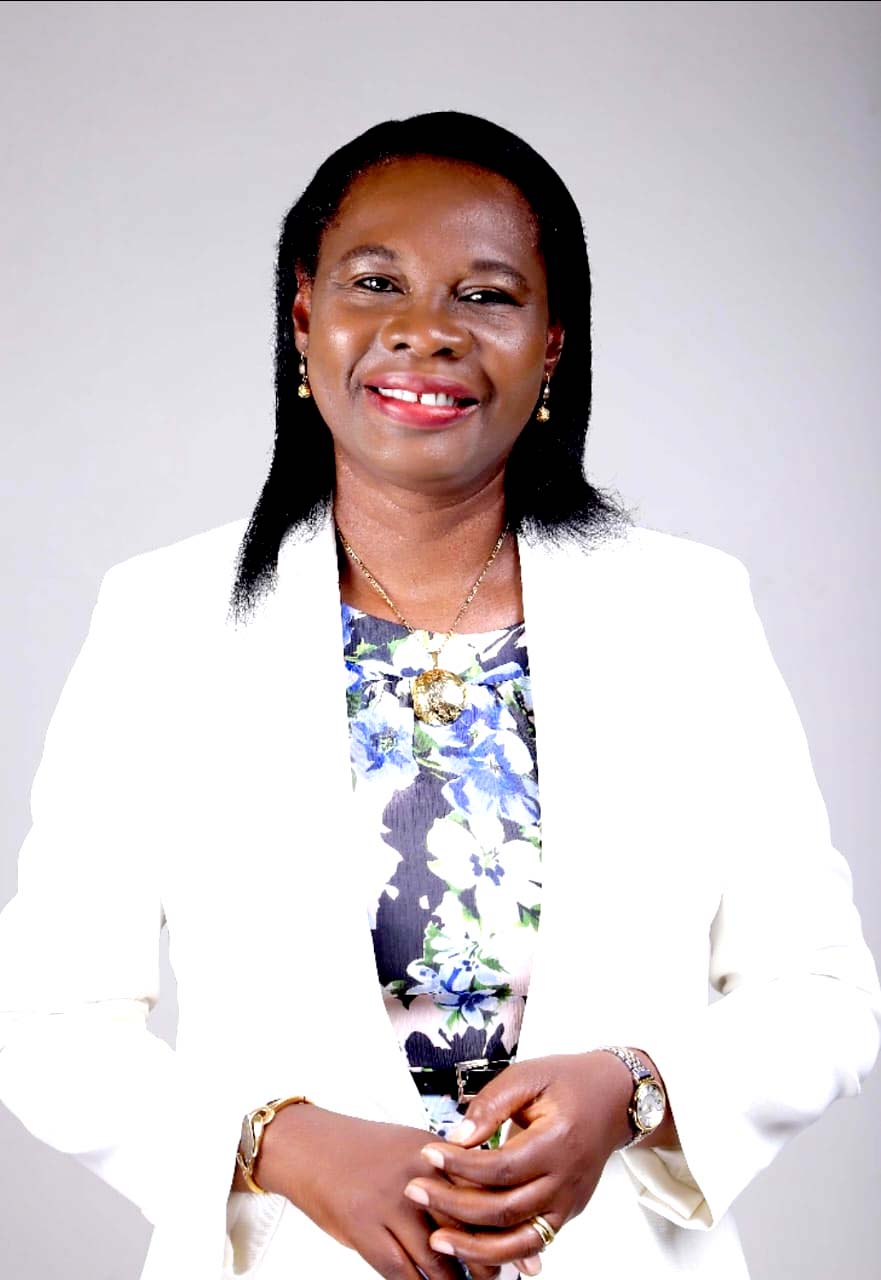
Mrs Uwa Osa-Oboh is a woman who has made an impact in Nigeria’s corporate world. She started her career as a lawyer and after practising for a few years, joined the leasing and loan syndication desk in the Corporate Finance division of a bank, before transitioning into a career in management consulting, with a then startup consulting firm, where in her words, she found her calling. She worked in Managing Consulting for 16 years, the last eight she became the CEO of the organisation. Today, she is the Head, Corporate Development, African Capital Alliance (ACA), an investment firm with a pan African focus.
In this interview with Vistastimes, she explains some of the reasons many women remain in their hidden corner without actualising their potential while others are able to achieve significant professional success.
Excerpts:
What is your take on this year’s IWD 2026, Give to Gain?
I think this year, the idea was for women to give in order to gain. In other words, how do you develop other people, younger women in particular? How do you pass the baton? If you have been able to achieve senior levels of responsibility, how do you sponsor others who can actively take over from you or in other areas? And I think the concept of give to gain is intrinsically not gender specific. It really is about how leadership should be approached, which is through an abundance mentality.
If a leader thinks in a very narrow manner, we say that he has a scarcity mentality. Such a leader is unlikely to be able to develop a large, productive, ecosystem, and even where they are able to impact a few people, it is likely that their overall impact and legacy will be sub-optimal and narrow.
When we think leaders with broad-based impact who have changed lives, be it Nelson Mandela, or a Barack Obama, though we may not have met them, their lives often have a significant impact on us. You find that they operate from an abundance mindset and have a strong believe in the potential of others. And I think that this is one of the hallmarks of a great leader. That’s why emphasising the give to gain theme, in my opinion, is important because, in effect, it makes a leader consider the fact that it has to be beyond them. In other words, I may be a good leader, but if I want to be a great leader, I must cultivate others. It is therefore a challenge to reflect on how we are intentionally giving in order to gain.
When one considers the requirement to give, it may not require parting with anything. It may simply be through giving others the opportunity to see me as a role model and through motivating others to do bold, impactful things. Look at Dr. Ngozi Okonjo-Iweala for an instance, she was the Nigeria’s Minister of Finance for several successive years, and many will always remember and laud her for the foresight, courage and determination to deliver the debt forgiveness programme by the Swiss Club to Nigeria. Many others may have simply said this is too big and there’s no way the Swiss Club debtors would forgive such the significant debt overhang that had become a crippling burden on Nigeria’s economic outlook at the time. Her competence and charisma was exhibited in a manner that surely would have “given” many young women a vision for their own potential in public service.
So in giving, you start by being a role model and doing the right thing, thus signalling to other women in your ecosystem, that great things can be done by a woman. And that they have every right to also aspire to do same.
Your impact in those areas you have worked even in African Capital Alliance is not hidden, what are your propelling factors, and what is your advice to aspiring women who want to build their career?
The first for me has to be the family that I grew up in. We often take this for granted, but when you have a family where the parents did not have gender bias, male or female thrive. I grew up having equal opportunity, attention and treatment with my brothers. My father never made me feel that as a female I was in any way inferior or that less would be expected from me.
Every child had their own gift or leaning. I have a brother who writes poetry, and I think that he’s one of the most poets in the world. He’s an unsung hero as far as I’m concerned. Others were more quantitative and excelled in the Sciences. I had my own strengths. I was literary and loved to read and this appetite was suitable nourished and honed. So, according to their strengths and inclinations, everybody was treated the same. And that I think is the best gift a parent can give a child, particularly a female child. You are saved from the psychological pitfall of considering yourself a pretender. You see yourself as worthy and as entitled as any other person. If you’ve done a good job and qualify for reward, you unabashedly expect that it should come to you without your contemplating the need to play the gender card. This merit card is always more powerful and dignifying than the gender card – and it starts with providing the girl child the opportunities early in life to discover their strengths and to develop them.
Constraints of preparing our girl or women for leadership positions, and entrepreneurship?
I’d like to highlight three factors in this regard. One is culture, the other is structure and the third is access to finance.
Culture sets expectations. If a woman is always seen as somewhat inferior, you don’t need to verbally state it, the message is communicated in the way you treat her. And if she ever tries to go against societal norms that limit her potential and her vision, she’s seen as an aberration.
Society casts a negative social mirror on such women by letting them know that they would be considered unattractive and less of a female if they don’t align with preset cultural expectations. As a result, she stops striving. She stops aspiring. She kills the God-given potential in her or at best limits it. A woman who may have thought of developing a chain of provision stores, becomes content to have a small cubicle store in front of her house. Not everyone can endure the pain, friction and tension of pursuing in their dreams in the face of such potential social recrimination and society is the poorer for it.
Also, structural constraints are in some ways related to cultural norms and expectations. In situations where women are solely expected to cook, clean the house, ensure the children are fine – all within 24 hours, it leaves little time for anything else. This is a structural limitation, which a woman desires a family, would have difficulty overcoming without the support of a sympathetic husband who boldly says, “I didn’t marry you because I needed a house help. You also need to thrive in line with your aspirations, and we will work together to provide you with the support you need”.
With those structures in place to help a woman, you find out that she can thrive and operate from a place of joy and peace, not one of abuse and affliction which makes it more beautiful to behold.
Finance, or the lack of access to it, is the final constraint that I will highlight. This is in turn related to some of the cultural and structural constraints that I earlier highlighted. Data exists that shows that women’s access to finance is severely constrained in business, relative to their male counterparts. This often starts with receiving little good quality education at a young age, which deprives them of the skills and competencies required to found and manage well built businesses. The traditional view of a woman’s future largely being that of a homemaking has tended to make parents, largely uneducated ones, deemphasise the importance of a strong educational foundation for their girl child. Other handicaps are the inability to access loans without the formal, express involvement of a male sponsor, or the inability to inherit landed property which remains one of the best forms of collateral for loans.
The good thing now is that society is beginning to understand the fact that if 50% of society belongs to a certain gender, and that it’s the society’s interest to therefore optimise the productivity of both the male and female. I think that logic is coming through. We are beginning to see women who are doing great things everywhere.
What steps do you suggest are the best way of empowering and eradicating poverty among women in the society?
Giving the constraints I mentioned earlier, one of the best ways to empower a woman who may have been a victim of some of the biases mentioned, is through vocational training programmes. Programmes that would help strengthen and formalise skills that women can readily adopt – many of which could also managed in a manner beneficial to her home and immediate family so that her dependents do not suffer. A lot of Cottage Industry skills enabling this, include cooking, catering services, clothes making and so on. In the villages, giving women training and access to resources that would facilitate more productive farming is also a way to empower them. Mohammed Younis’ experience with micro-financing in Bangladesh literarily unleashed the microfinance industry, we know today, based on extending small amounts of business capital to women, who managed the process with such stewardship that it birthed an entire industry. This underscores the fact that women, uneducated or otherwise, are extremely responsible in how they manage their businesses and finances. The Women Ministries at the Federal and State levels should deliver pragmatic, relevant, high-impact programmes that would really deliver benefits to the women within their purview. NGOs and Civil Society also stand ready to assist in this effort.