
Joseph Tegbe, Chairman of the National Tax Policy Implementation Committee (NTPIC), has emphasized that the success of Nigeria’s recently enacted tax reform framework will rely less on the ambition of its legislation and more on the discipline of its execution. Speaking at the 2026 Leadership Retreat of the Nigeria Revenue Service (NRS), Tegbe underscored that the country’s tax reform journey is at a critical juncture where effective implementation will determine long-term fiscal outcomes.Tegbe highlighted that Nigeria’s tax-to-GDP ratio remains among the lowest for major economies, constraining fiscal flexibility and heightening vulnerability to fluctuations in oil prices. With public expenditure pressures rising and macroeconomic stability increasingly dependent on sustainable domestic revenue mobilisation, he argued that institutional performance is now the primary driver of fiscal resilience.According to Tegbe, the passage of 4 new tax laws marks only the beginning of a broader reform agenda. He described the initiative as a systemic recalibration of Nigeria’s fiscal architecture, rather than a routine policy update. The true measure of success, he asserted, will be the credibility of implementation, not the design of the laws themselves. The NRS, he noted, functions as the nation’s “Revenue System Integrator,” with outcomes reflecting the strength of an interconnected ecosystem that encompasses policy clarity, enforcement consistency, digital infrastructure, dispute resolution efficiency, and intergovernmental coordination.Central to Tegbe’s address was the principle that tax policy must serve as an enabler of governance. He stressed that the framework must embody simplicity, equity, predictability, and administrability at scale. These principles, he explained, foster voluntary compliance, reduce operational friction, and strengthen investor confidence. By contrast, ad-hoc adjustments or policy drift, he warned, could undermine reform momentum, unsettle businesses, and deter investment, which thrives on predictable rules rather than shifting announcements. Structured sequencing, clear transition mechanisms, and continuous feedback between policymakers and administrators are therefore critical to sustaining reform credibility.Tegbe further argued that revenue reform cannot succeed in isolation. Achieving sustainable gains requires a whole-of-government approach, leveraging robust taxpayer identification systems, integrated financial data, efficient dispute resolution, and harmonized coordination across federal and subnational levels. This approach, he said, reduces leakages, eliminates multiple taxation, and reinforces confidence in the system.Importantly, Tegbe expanded the definition of reform success beyond headline revenue figures. Durable reform should be measured by higher voluntary compliance rates, lower administrative costs, fewer disputes, faster resolution cycles, and stronger taxpayer confidence. “Sustainable revenue performance is built on trust and efficiency, not enforcement intensity,” he concluded, emphasizing that the legitimacy and predictability of the system are more critical than punitive measures.With the legislative framework now firmly established, Tegbe noted that Nigeria’s focus has shifted from policy design to effective delivery. The next phase, he stressed, will be defined by the consistency, coherence, and discipline with which the reforms are implemented. Execution, therefore, is the defining variable in the next chapter of Nigeria’s revenue transformation. The country’s ability to achieve lasting fiscal resilience and broaden its revenue base will depend on disciplined, credible, and integrated implementation across all levels of government, ensuring that the promise of reform translates into measurable, sustainable outcomes for the economy and citizens alike.In summary, Tegbe’s address framed Nigeria’s tax reform not merely as a legislative accomplishment but as a transformative journey requiring operational rigor, institutional alignment, and a focus on trust, compliance, and efficiency. The success of this agenda, he made clear, hinges on execution discipline—making it the single most critical factor in shaping the nation’s fiscal future.
Tax reform success hinges on execution discipline – Tegbe
by  Emeka Moses
Emeka Moses 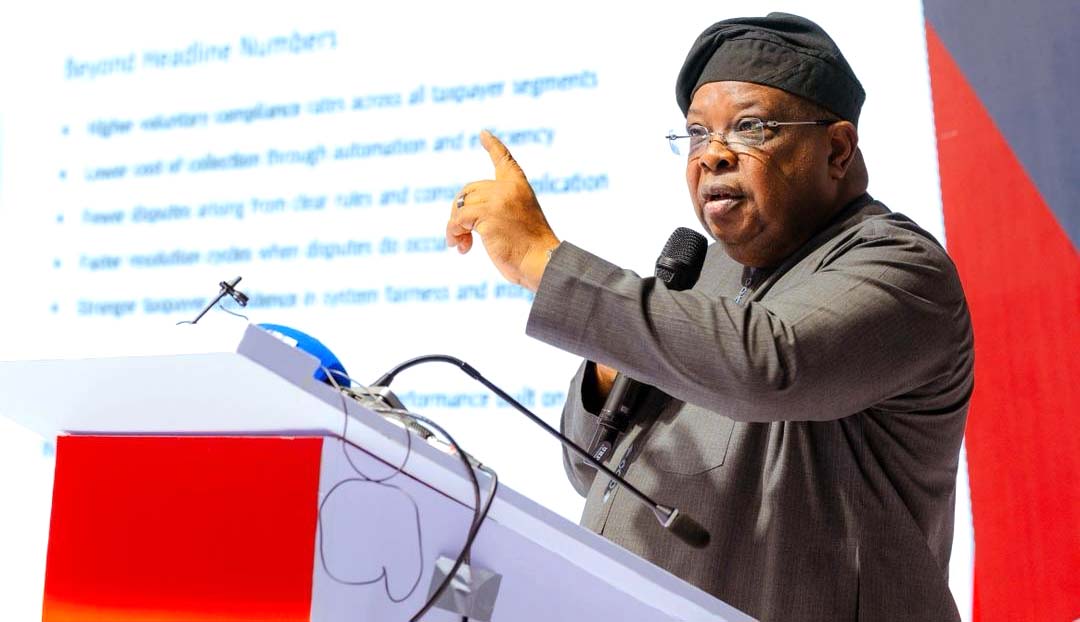



Latest from News

600 Food Boxes, Hundreds of Smiles: Olam Agri Brings World Food Day Cheer to Families Across Nigeria
Olam Agri a leading agribusiness across food, feed and fibre value chains, has partnered with the Lagos Food Bank Initiative (LFBI) to distribute 600 food boxes of spaghetti, macaroni, semolina, and vegetable oil to vulnerable households across Lagos, Kano, Nasarawa and Kwara

The Sky Has No Gender: Why The Girl Child Needs a Pathway into Aviation
As the aviation industry continues to demand technical expertise, discipline and leadership, Captain Evarest Nnaji, Group Chairman of OAS Helicopters, has called for greater access to education, mentorship and career opportunities to encourage the girl child to consider careers in aviation. In

Growtech West Africa, NADF Partner to Strengthen Nigeria’s Agricultural Growth and Food Security
Growtech West Africa, the international agribusiness platform, has announced a collaboration with the National Agricultural Development Fund (NADF) ahead of the inaugural exhibition in Lagos, as stakeholders seek to strengthen access to technology, investment, and expertise that can support productivity and food

How Nigerians Abroad Can Grow Wealth at Home
A Nigerian professional in London closes her laptop after another workday. In Toronto, a family reviews its financial plans for the next few years. In Houston, an entrepreneur considers what to do with money set aside for a future commitment in Nigeria.

FlashChange to Host Webinar on the Realities of Building Crypto in Nigeria
FlashChange, a virtual assets and financial technology company, is set to host a virtual industry webinar focused on the opportunities, challenges and realities of building a sustainable cryptocurrency industry in Nigeria. The webinar, themed “Beyond the Framework: The Realities of Building Crypto