 Emeka Moses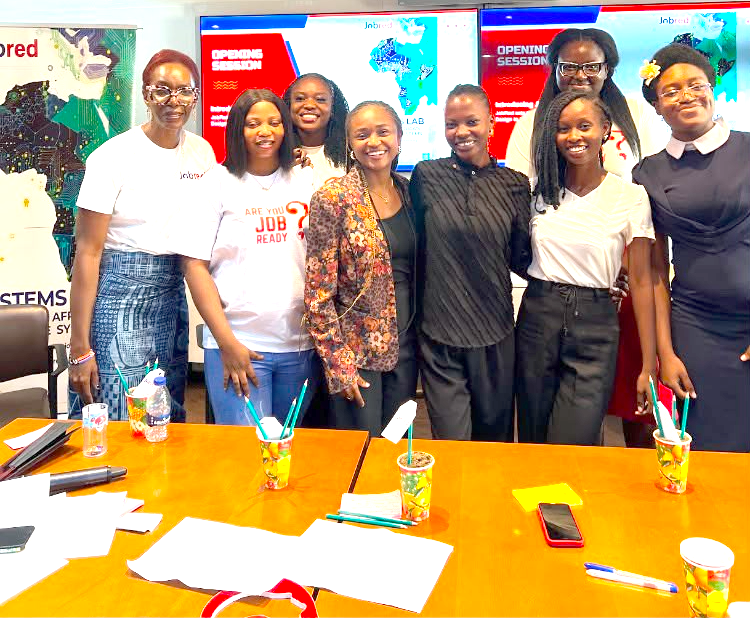
Nigeria’s transition to a green economy will succeed only if the country deliberately prepares its workforce with skills, partnerships, and opportunities required for emerging industries, the Director-General of the National Council on Climate Change (NCCC), Dr. (Mrs.) Omotenioye Majekodunmi, has said.

In her keynote address at Systems Lab 2.0, convened by Jobred at The Ford Foundation West Africa Office in Ikoyi Lagos, the NCCC Director-General described climate action as more than an environmental imperative, stressing that it is equally a job agenda, an economic agenda, and ultimately a people agenda.
According to Majekodunmi, “The green economy is not a distant possibility, it is already here. “The question before us is not whether the green transition will happen, but how Nigeria positions its people to benefit from it.”
She said, “Nigeria’s commitment to achieving net-zero emissions by 2060 will create demand for new industries and occupations, including renewable energy engineers, carbon market specialists, electric vehicle technicians, climate data analysts, green finance professionals, and waste management experts. She noted that behind every climate policy is a workforce that must first be equipped with the right knowledge and skills. “Climate action is therefore not only an environmental imperative; it is a job agenda, an economic agenda, and ultimately a people’s agenda,” she said.
Majekodunmi commended Jobred Systems Lab and The Ford Foundation, for convening stakeholders around practical workforce solutions, describing the proposed Climate-Smart Jobcentre as potential to become a national product.
“The Climate-Smart Jobcentre represents far more than another programme or institution. It is a bridge between education and employment, between climate ambition and economic opportunity, and between today’s workforce and tomorrow’s economy”.
On the theme “Re-Engineering Workforce Systems for the New Economy: Operationalizing the Climate-Smart Jobcentre,” Systems Lab 2.0 brought together representatives from government, academia, civil society, development organisations, sustainability practitioners, innovators, employers, and young professionals to examine how Nigeria can build an inclusive workforce for the emerging green economy.
Principal Systems Architect and Co-Founder of Jobred, Mrs. Ajo Balogun, said, “Today is not about discussing unemployment or climate. It is about building the operating system that connects both”.
Mrs. Balogun introduced Jobred’s Climate-Smart Jobcentre (Tackle Hub) Framework, an integrated workforce system designed to assess talent, prepare job readiness, connect youth with opportunities, and support climate-focused jobs and entrepreneurship”.
A multi-sector panel featuring sustainability professionals, environmental advocates, ESG experts, and corporate leaders explored the barriers preventing young Nigerians from accessing meaningful employment and examined the partnerships required to accelerate workforce readiness. Discussions highlighted the need for stronger collaboration between government, employers, educational institutions, and the financial institutions ecosystem.