 Emeka Moses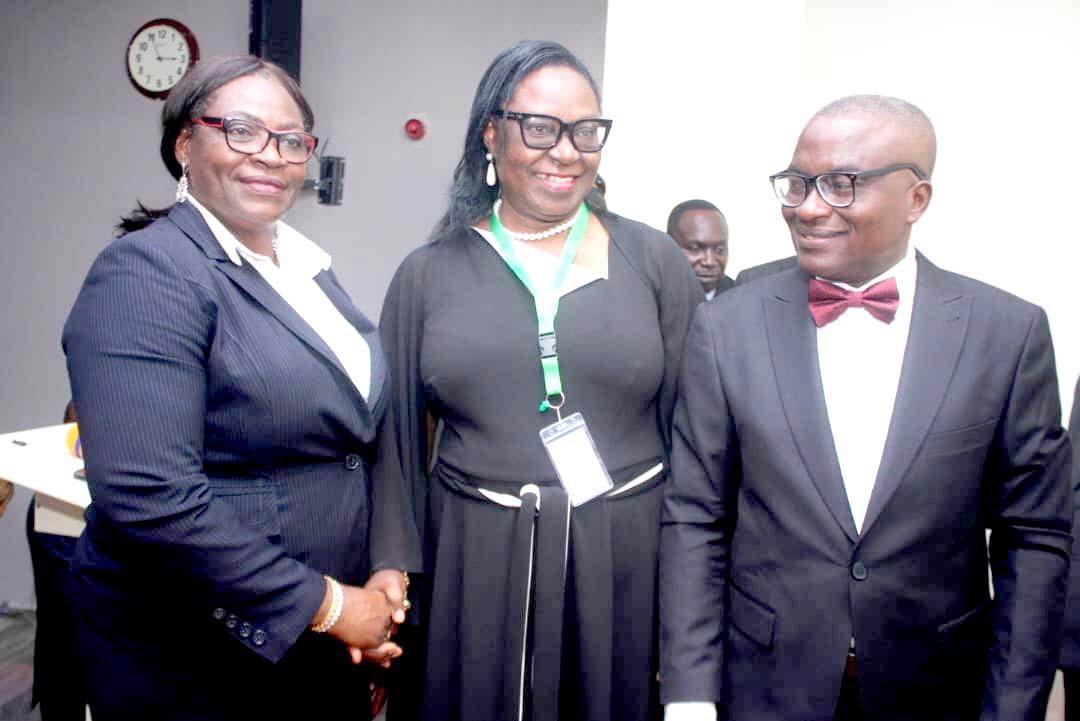
L-R: Dame Sylvia Taiwo Ige FERP, President, AERMP; Mrs Elizabeth Amrovhe, FERP, Retired Deputy Director, Central Bank of Nigeria and Olayinka Odutola PhD, FERP, Director General / CEO, Association of Enterprise Risk Management Professionals (AERMP)
The Association of Enterprise Risk Management Professionals (AERMP) has successfully concluded the 2026 Global Financial Regulation (FinReg) Week and Basel Accord Day Conference, a week-long virtual programme held from 1–7 July 2026, bringing together regulators, financial institutions, policymakers, enterprise risk professionals, academics, professional bodies and industry leaders from across the world to examine the future of financial regulation in an increasingly complex global environment.
Held under the theme “Basel at a Crossroads: From Basel I to Basel III Finalisation – Can Capital Regulation Catch Up with Emerging Risks?”, the conference provided a multidisciplinary platform for examining evolving regulatory expectations, Basel implementation, prudential supervision, operational resilience, governance, digital finance, enterprise risk management and emerging risks confronting financial systems worldwide.
Throughout the week, participants engaged in structured discussions covering the evolution of the Basel Framework, supervisory capacity, financial resilience, operational and cyber risks, digital finance, governance, regulatory coordination and the growing importance of adaptive, risk-based supervision. Across the various sessions, a consistent message emerged: while capital adequacy remains fundamental, resilient financial systems increasingly depend upon effective supervision, sound governance, operational resilience, international cooperation and forward-looking regulatory frameworks capable of responding to rapidly evolving risks.
Conference Leadership
The conference was chaired by Alhaji (Dr.) Umaru Kwairanga, MBA, F.IoD, FCS, FCIP, Chairman of Nigerian Exchange Group (NGX), who emphasised that financial regulation has entered a defining era in which regulators must respond to digital transformation, artificial intelligence, climate-related financial risks, cyber threats, digital assets, fintech innovation and geopolitical uncertainty without constraining responsible innovation.
In his address, Dr. Kwairanga observed that the enduring principles underpinning the Basel Framework—including resilience, transparency, effective governance and sound risk management—remain highly relevant across the broader financial ecosystem beyond banking supervision. He highlighted the importance of building regulatory systems that inspire investor confidence, support sustainable market development and encourage collaboration among regulators, exchanges, policymakers, academics and industry practitioners. He further urged participants to view regulation not merely as a compliance exercise but as a strategic enabler of sustainable economic development and resilient financial markets.
Delivering the welcome address on behalf of the President of the Association, Dame Sylvia Taiwo Ige FERP, the Director-General/Chief Executive Officer of AERMP, Dr Olayinka Odutola FERP welcomed participants to the 2026 Global FinReg Week and Basel Accord Day Conference and reaffirmed the Association’s commitment to advancing dialogue on financial regulation, enterprise risk management and institutional resilience. He noted that the conference was designed to provide a platform for regulators, financial institutions, policymakers, academics and practitioners to critically examine the evolution of the Basel Framework and the adequacy of existing regulatory approaches in responding to rapidly emerging risks. He encouraged participants to engage openly throughout the week, exchange practical experiences across jurisdictions and contribute ideas that would strengthen prudential supervision, governance, operational resilience and sustainable financial system development.
The conference keynote was delivered by Dr. Temidayo Fasipe, Ph.D, FERP, Deputy Director of the Central Bank of Nigeria, who examined Basel III Finalisation from a regulatory perspective.
Drawing upon the evolution of the Basel Accords, Dr. Fasipe (who cautioned that he was speaking in his personal cum professional capacity as an Enterprise Risk Manager and Fellow of the Association, and his views should therefore be treated as such and not that of CBN) argued that capital adequacy alone no longer guarantees financial resilience, noting that recent global banking failures demonstrated how liquidity pressures, confidence shocks and interest-rate risks can overwhelm institutions with seemingly adequate capital positions. He explained that while Basel III Finalisation completes the post-2008 reform agenda, today’s emerging risks—including artificial intelligence, cyber risk, climate-related financial risks, digital finance and non-bank financial intermediation—require a broader prudential framework extending beyond capital regulation.
His presentation highlighted the growing importance of supervisory judgement, stress testing, scenario analysis, operational resilience frameworks, macroprudential oversight and international regulatory coordination. Applying these themes to Nigeria, he stressed that recapitalisation represents only one dimension of resilience and underscored the need for stronger supervisory capacity, effective governance, robust risk culture and enhanced Pillar 2 supervisory frameworks alongside Pillar 1 capital requirements.
Digital Assets and Emerging Regulatory Risks
Tanmay Banerjee, Director, Risk & Compliance Tech at CyProTorus Pvt. Ltd., India, examined the growing role of digital assets within the global financial ecosystem and the regulatory challenges accompanying their increasing adoption.
His presentation distinguished digital assets and virtual assets, explaining their blockchain-based architecture, cryptographic security and decentralised characteristics while outlining legitimate market applications alongside risks associated with illicit financial activities. He discussed the Basel Committee’s treatment of digital asset exposures across credit, market, liquidity, operational, counterparty and concentration risks and reviewed the Financial Action Task Force (FATF) recommendations relating to virtual asset service providers, customer due diligence, continuous monitoring, record keeping and national regulatory coordination. The presentation also explored supervisory reporting frameworks designed to improve transparency, compliance and regulatory oversight across digital asset ecosystems.
The panel session, which mainly focused on Questions and Answers on the topic being presented, was headed by another srasoned risk expert, Dr Olugbile Erinwusi FERP, the Chief Risk Officer of ProvidusUnity Bank and Director of Capacity Building of the association. He contributed significantly by adding his voice to the topic being discussed, BASEL ACCORD and also intimated the participants on the efforts already in progress to continually build capacity around the theme and risk management generally.
Goodwill Messages and Distinguished Guests
The Chartered Institute of Taxation of Nigeria (CITN) was represented at the conference by its current President and Chairman of Council, Mr. Innocent C. Ohagwa, FCTI.
In his remarks, he commended AERMP for convening a global platform that brought together regulators, financial institutions, academics and practitioners to examine one of the most consequential issues confronting the global financial system. He emphasised that financial regulation and taxation are mutually reinforcing pillars of economic resilience, observing that effective tax administration, sound financial regulation and enterprise risk management collectively strengthen macroeconomic stability, enhance investor confidence and support sustainable development. He further encouraged continued collaboration among financial regulators, tax professionals, policymakers and enterprise risk practitioners in addressing emerging global risks.
The conference was also attended by Mrs. Uto Ukpanah, FCIS, President and Chairman of the Governing Council of the Institute of Chartered Secretaries and Administrators of Nigeria (ICSAN), who congratulated AERMP for organising the conference and noted that the programme would deepen understanding of international regulation while creating valuable opportunities for dialogue on global banking requirements. She expressed appreciation for the engagement and encouraged continued collaboration between ICSAN and AERMP in advancing professional discourse and exploring future areas of partnership.
Other notable dignitaries include the immediate past President, Chartered Institute of Directors, CIoD, Alhaji Tijani Borodo, Retired Director at the Central Bank of Nigeria and former Resident Electoral Commissioner, REC, Anambra State, Dame Elizabeth Agu, mni, Former Director and Chief Learning Officer, NDIC ACADEMY, Francis Adekunle Agboola FERP, Head of Department of Banking & Finance, COVENANT UNIVERSITY, Dr Mrs Folasade Adegboye. Others were Prof Kehinde Adetiloye and Prof Ochei Ikpefan, both of COVENANT University, Ota Ogun State, Prof Tahir Hamid of Bayero University Kano and Prof Maryam Abdu of Kaduna State University.
International participation
Global FinReg Week 2026 reflected the increasingly international nature of financial regulation and enterprise risk management.
Speakers and contributors participated from the United Kingdom, United States of America, Canada, United Arab Emirates and India, while some participants also joined the conference from numerous jurisdictions where the membership of the association has been spreading, including the United Kingdom, United States, Canada, The Gambia, Sierra Leone, Côte d’Ivoire, Liberia, Ghana and Mozambique, among others.
This broad international participation enriched discussions by bringing diverse regulatory perspectives and practical experiences to conversations on Basel implementation, prudential supervision, governance, operational resilience, enterprise risk management, digital finance and emerging regulatory challenges.
Conference Conclusion
Bringing the conference to a close, the Director-General/Chief Executive Officer of AERMP, Olayinka Odutola, PhD, FERP, expressed appreciation to financial regulators, supervisory authorities, speakers, moderators, professional bodies, industry leaders and participants for their commitment and contributions throughout the week-long programme.
The conference officially concluded with the release of a commemorative address by the DG/CEO, Dr Olayinka Odutola, FERP reaffirming the central message that effective regulation, strong supervisory institutions and sound governance remain essential foundations for resilient financial systems and sustainable economic development.