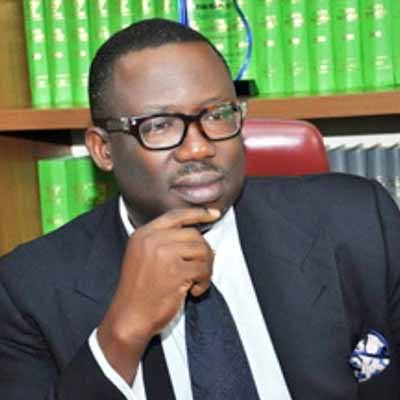
The African Bar Association (AFBA) has honoured the Chairman of the Alliance for Economic Research and Ethics (AERE), Dele Oye, with its 2026 Medal of Merit for his outstanding leadership and contributions to the growth of Nigeria’s private sector.
Oye, who is the immediate past Chairman of the Organised Private Sector of Nigeria (OPSN) and immediate past president of NACCIMA, received the award at the association’s 2026 Annual Conference, in Cape Verde.
The conference, taking place between September 20 and 24, 2026, brings together legal professionals and other stakeholders from across Africa and the diaspora for discussions on legal, economic and governance issues affecting the continent, with a view to proffering practical solutions to the challenges confronting Africa and advancing sustainable development across the continent.
The association’s recognition places Oye among a list of prominent African leaders and professionals who have previously received the Medal of Merit including former Nigerian President Goodluck Jonathan, former Tanzanian President Jakaya Kikwete, former Liberian President Ellen Johnson Sirleaf, former Sierra Leonean President Ernest Bai Koroma and former Ghanaian President Nana Akufo-Addo.
Others include former OPEC President Professor Emmanuel Ibe Kachikwu, former Chief Justice of South Africa Justice Mogoeng Mogoeng, former Chief Justice of Sierra Leone Justice Desmond Edwards, former South African judge Navanethem Pillay and former Togolese Prime Minister Joseph Kokou Koffigoh, amongst others.
In a citation, the AFBA described Oye as an “accomplished legal practitioner, economic advocate, and business leader with over 35 years of distinguished practice spanning corporate governance, international trade facilitation, policy reform, dispute resolution, and regulatory compliance.”
The association continued: “Called to the Nigerian Bar in 1989 after earning his LL.B. from Obafemi Awolowo University, he served for 13 years as Lead Prosecutor to the Legal Practitioners Disciplinary Committee and is a former member of the prestigious Body of Benchers.
“Beyond legal practice, Oye is a prominent figure in regional trade and economic advocacy. He has served as Chairman of the Organised Private Sector of Nigeria (OPSN), Honorary Life Vice-President of NACCIMA, Chairman of the Nigerian-Türkiye Business Council, and on the boards of NELFUND and NIWA.”
“A Fellow of the Institute of Chartered Mediators and Conciliators (FICMC) and a recognized voice on global economic platforms, his exceptional contributions to legal ethics, economic development, and institutional governance across Africa make him a highly deserving recipient of the 2026 African Bar Merit Award,” the AFBA added.
In his address, AFBA President, High Chief Ibrahim Eddy Mark, said the theme of the conference, “Resilient Africa’s Roadmap for Sustainable Development: Addressing and Strengthening Issues of Military, Security and Economic Stability,” is both timely and urgent.
According to him, “Africa stands at a defining moment. Our continent possesses enormous human and natural resources, a youthful population, remarkable entrepreneurial energy and immense economic potential. Yet we continue to confront armed conflicts, terrorism, insecurity, economic instability, democratic reversals, poverty, youth unemployment, irregular migration and barriers to intra-African trade and movement.
“The question before us is simple but profound: What kind of Africa do we want to leave for the next generation? And, as lawyers, we must ask: What role must the law play in building that Africa?”
He continued: “There can be no sustainable development without the rule of law. There can be no credible democracy without constitutionalism. There can be no sustainable investment without confidence in our courts and institutions. And there can be no lasting peace where justice is denied.
“The African Bar must therefore remain a strong and independent defender of the rule of law, judicial independence, human rights and constitutional governance. Democracy must be more than periodic elections. It must include credible elections, accountable institutions, transparency, respect for constitutional limits, and freedom of expression, civic participation and peaceful transitions of power.
“We must deepen democratic institutions and restore public confidence in governance. Where institutions are weak, our response must be to strengthen them -not abandon them.”
On security and peace in Africa, the President stated, “African Bar Association has received reports of the unending genocidal actions in Darfur, Cameroon and the Great Lakes. The African Bar Association calls for an end to these conflicts and for accountability for the harm caused to victims.
“African Bar Association calls on African Countries to ratify the Malabo Protocol granting jurisdiction to African Court of Justice and Human rights to investigate and prosecute international crimes defined in the Protocol in the continent.
“We deeply express our concerns about unconstitutional change of Governments in Africa, including by coup d’etat, fraudulent elections and corruptive tendencies. Our continent cannot develop sustainably while communities remain trapped in conflict, terrorism and violent extremism.
“We need stronger African cooperation in intelligence sharing, counter-terrorism, border management, cybercrime prevention, judicial cooperation and conflict resolution. But we must also insist that security operations remain subject to the rule of law. National security and human rights are not enemies. They are complementary responsibilities of a legitimate state.
“We must equally reaffirm that military institutions have an important role in protecting nations, but constitutional civilian authority must remain supreme. The solution to weak democracy cannot be military intervention. The answer to poor governance must be better governance. The answer to flawed institutions must be stronger institutions.”