 Emeka Moses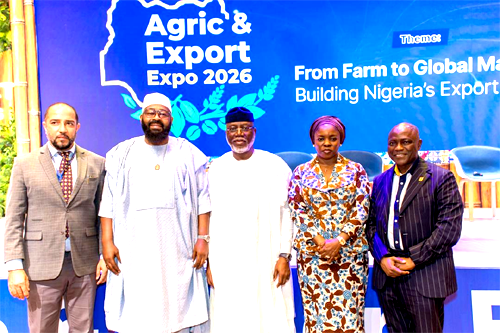
Nigeria’s non-oil and agricultural export sectors remain critical drivers of economic growth, diversification and sustainable job creation. With the right investments, partnerships and policy support, both sectors possess significant potential to strengthen the country’s competitiveness in global markets. Initiatives such as the FirstBank Agric & Export Expo 2026 continue to provide stakeholders with opportunities to explore practical pathways for unlocking that potential.
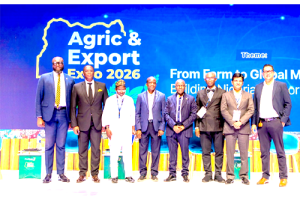
At the recently concluded 5th Edition of the FirstBank Agric & Export Expo 2026, policymakers, regulators, agribusiness leaders, exporters, investors, development partners and key stakeholders across the agricultural and export ecosystem called for practical strategies to strengthen Nigeria’s non-oil export sector and expand the country’s participation in global trade.
The economic opportunities within agriculture and non-oil exports are among the reasons FirstBank introduced the initiative. Over the years, the Expo has evolved into one of Nigeria’s leading platforms for dialogue, collaboration and engagement across the agricultural and export value chain.
In his opening remarks, the Chief Executive Officer of the FirstBank Group, Olusegun Alebiosu, noted that the Expo has evolved into a leading platform for conversations and collaboration that continue to advance Nigeria’s agricultural and non-oil export sectors.
“What began as an initiative to create awareness and facilitate engagement has grown into a significant ecosystem that connects producers, processors, exporters, financiers, policymakers and investors across the value chain,” he said.
The Expo, themed “From Farm to Global Markets: Building Nigeria’s Export Value Chain,” featured experts from across the public and private sectors who examined opportunities and challenges within Nigeria’s agribusiness and export ecosystem. Discussions centered on strengthening productivity, improving value addition and expanding access to international markets.
Alebiosu further emphasized that agriculture and exports remain critical to Nigeria’s economic diversification agenda.
“They hold tremendous potential for strengthening sustainable economic growth. As a Bank that has been woven into the fabric of Nigeria’s development for over 132 years, we remain committed to supporting businesses and entrepreneurs operating within these sectors,” he said.
According to him, this year’s Expo marked a deliberate shift from conversations to execution.
“Our objective is not only to showcase opportunities within agriculture and exports but also to facilitate the connections, partnerships, financing solutions, market access opportunities and knowledge exchange required to transform ideas into thriving enterprises.”
He also underscored the critical role of agriculture and non-oil exports in driving Nigeria’s economic transformation and long-term prosperity, noting that while agriculture remains a backbone of sustainable economic growth, non-oil exports present significant opportunities to diversify revenue sources, generate foreign exchange and strengthen economic resilience.
During the two-day Expo, participants engaged in technical sessions, business matchmaking opportunities, exhibitions and networking engagements designed to unlock value across the agricultural and export ecosystem. The event attracted more than 2,000 participants and over 100 exhibitors, bringing together stakeholders from across Nigeria and beyond to explore opportunities for growth, investment and collaboration.
The importance of the conversation was reflected in the caliber of participation at the event. The keynote address was delivered by Senator Abubakar Kyari, Honourable Minister of Agriculture and Food Security, who provided insights on advancing agricultural productivity and strengthening food systems.
The event also featured several distinguished guests, including Mohammed Umar Bago of Niger State, Governor Monday Okpebholo of Edo State, Governor Lucky Aiyedatiwa of Ondo State, Governor Dapo Abiodun of Ogun State, and Governor Babajide Sanwo-Olu of Lagos State, who was represented by Abisola Olusanya, Commissioner for Agriculture and Food Systems. International perspectives were also provided by Ronaldo Vieira, Brazil’s Consul General in Lagos.
A recurring theme throughout the discussions was the need to move beyond the export of raw commodities and focus on building stronger value chains capable of delivering greater value to the economy. Stakeholders highlighted the importance of processing, logistics, infrastructure, market access and quality standards in positioning Nigerian products to compete more effectively in international markets.
Now in its fifth edition, the FirstBank Agric & Export Expo has evolved into one of Nigeria’s foremost platforms for promoting dialogue, collaboration and innovation within the agriculture and export sectors. Through the initiative, FirstBank continues to champion agriculture and non-oil exports as important drivers of economic diversification, food security, value creation and sustainable foreign exchange earnings.
Beyond the conversations, the Expo provided participants with valuable insights into emerging opportunities, evolving market dynamics and practical approaches to strengthening Nigeria’s agricultural and export competitiveness. As stakeholders continue to push for deeper collaboration and investment across the value chain, the consensus from the Expo was clear: unlocking Nigeria’s agricultural and export potential will require sustained commitment, stronger partnerships and a greater focus on execution.