 Emeka Moses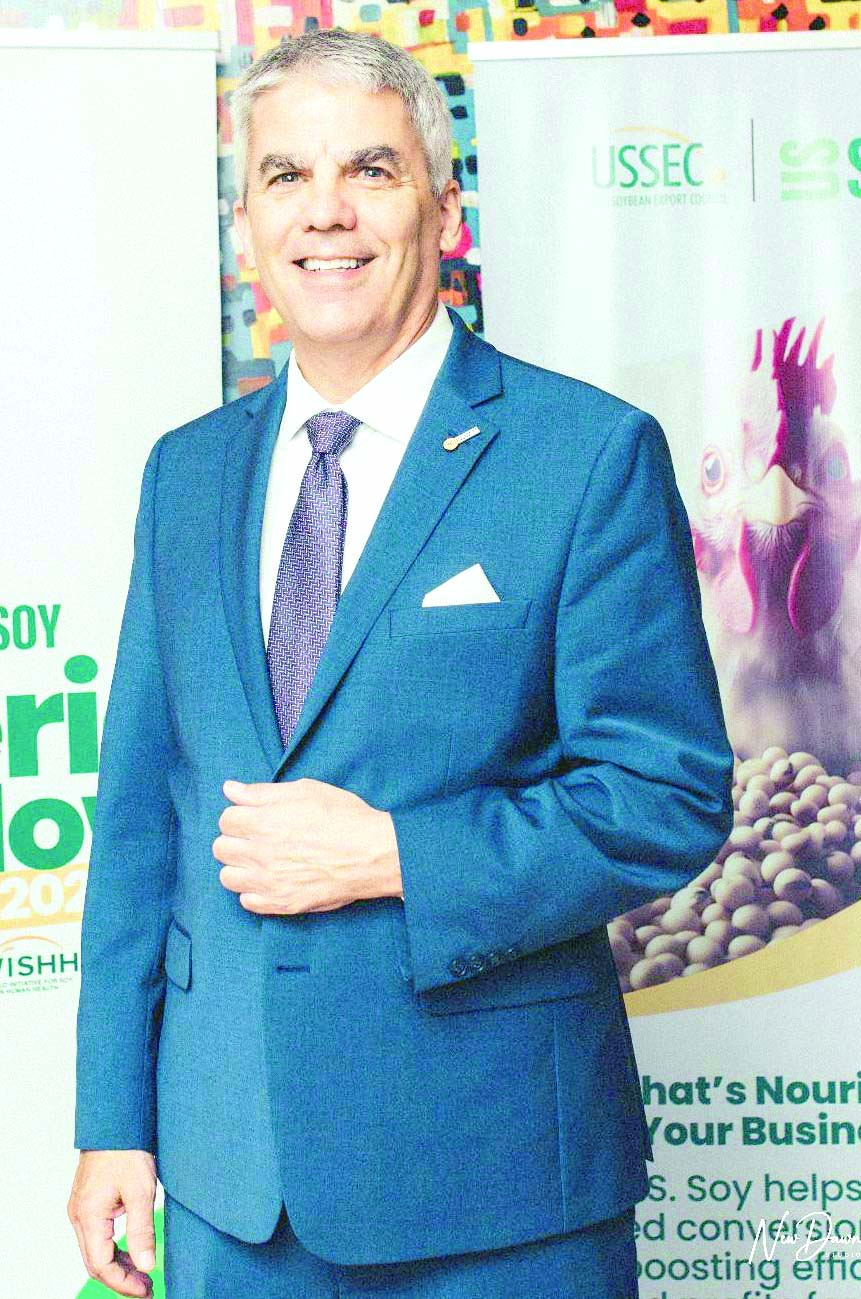
Brent Babb, Executive Director, Global Soy Excellence Center & Sub-Saharan Africa, USSEC, in this interview with vistastimes, reveals the global demand for U.S. Soy, and how USSEC’s efforts have helped Asia and North Africa develop their soybean market. Recently Brent Babb and his group were in Nigeria to collaborate with the poultry, aquaculture, and livestock industries and as well build demand for the U.S. Soy in Sub-Saharan Africa.
Excerpts:
U.S. Soy has been collaborating in Nigeria since 2019, what socio-economic or commercial attractions informed USSEC’s decision to participate in Nigeria’s emerging market?
International markets are critical to U.S. soybean farmers. Over 60% of our crop is exported worldwide. We’ve worked extensively in Asia and North Africa, and we see strong opportunities in Sub-Saharan Africa, with Nigeria as the regional leader. Population growth is driving demand, but per capita consumption is still low. That gap creates a significant opportunity, and our role is to complement Nigeria. Nigeria grows soybeans, but as demand for consumption rises, more soybeans will need to be imported. We’re here to work with the poultry, aquaculture, and livestock industries, and with the soy foods sector. Our goal is to complement those industries and build demand and use for soy.
What specific technical and commercial value does U.S. Soy offer Nigerian livestock farmers, feed millers, and soy processors today?
Soy offers one of the best proteins available, especially for feed. U.S. Soy has high levels of digestible amino acids. It’s not just crude protein—it’s digestibility for poultry, livestock, and fish. The energy value in soy is also often overlooked. Higher energy means you can reduce energy costs in the diet while maintaining performance. The other key value is consistency. As a producer, you know the U.S. Soy products will be the same every time, year-round. That consistency has real value. You don’t need to over-formulate because the digestibility and energy values are reliable. That reduces costs.
How does USSEC add value beyond the soybean itself?
We work directly with poultry producers and feed mills on formulation and materials handling. It’s not just about soy—it’s about operational efficiency across the feed mill. We also emphasize biosecurity, which is critical for poultry. We’ve done extensive work on this in North Africa and globally. We provide ongoing commercial support, but our Soy Excellence Center is the main vehicle for technical training. Colleagues here can speak more about that program.
In early 2025, Nigeria imported 62,000 tons of U.S. soybeans after a 6-year break. How are you working with Nigerian importers to ensure steady trade?
We’re here for the long term. We’ve been in many markets for years before exports ramped up. Last year’s Nigerian purchases from the U.S. were encouraging, and we expect that to continue, though volumes may vary year to year. We’re exporting soybeans and working with Nigerian crushers as the crushing industry expands to meet demand for soybean meal and soybean oil for human consumption. The U.S. and Nigeria can continue as partners. This isn’t a competition with local soy production. Local production and imports can grow together.
What is your final assessment of Nigeria’s market?
The energy and opportunity in Nigeria are uplifting. Growth won’t always be linear, but the energy is there, demand is there, financial investment is coming in, and the value chain gets stronger each year. Nigeria is well positioned to take advantage of that opportunity.
What are the main challenges you see?
Financing is often the biggest challenge—pulling all the pieces together. The other is consistency across the value chain. Sometimes one segment does well while another lags. For a strong, consistent value chain, you need quality day-old chicks, reliable soybean supplies for crushers to run at high capacity, and consumer demand that can withstand inflation so Nigerians can afford protein daily and weekly.