 Emeka Moses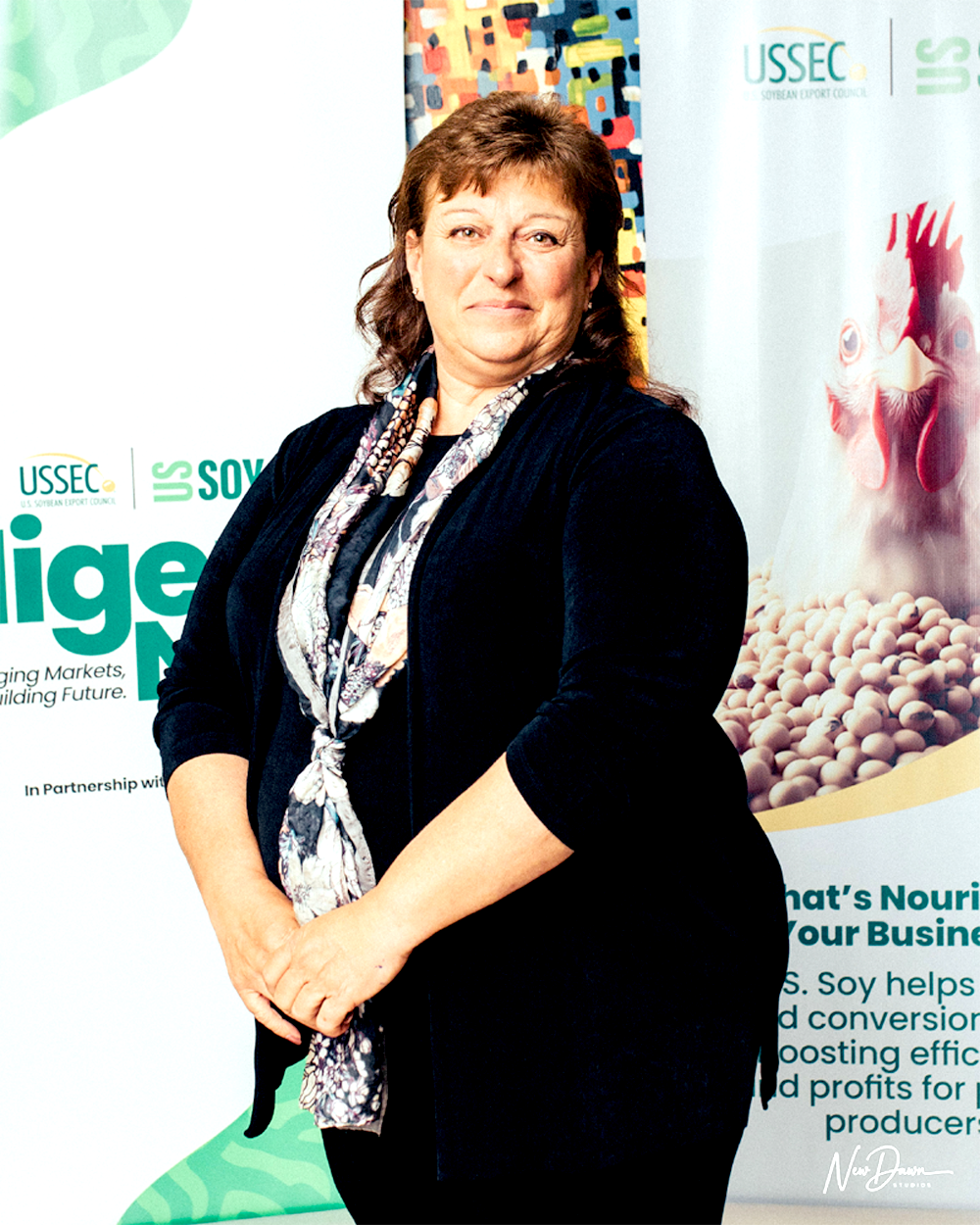
Excerpts:
How are American soybean growers positioning supply, quality, and sustainability to support Nigeria’s goal of closing its animal protein deficit?
We see it as collaborating with Nigeria. As a farmer in North Dakota, I’m looking to work with Nigerian agribusiness and food security stakeholders—sharing knowledge and learning from you. There’s a saying in the U.S.: “A rising tide lifts all boats.” That’s our approach. I’ll go back to my farm and maintain the product consistency and sustainability Nigeria needs, then work with growers and feed millers here to show it can be done. This is a business on my farm, and it can be a business on yours too. Here’s how we work together.
U.S. Soy has the lowest carbon footprint globally. What practices drive that?
Every farm is different, but on my farm, we focus on soil health and conservation. Soil is critical to producing quality food. We use cover crops to prevent erosion, especially with high winds of 70 mph/113 kmph in our region. We also use precision agriculture and GPS technology to reduce unnecessary field passes. Some farmers use drones for crop protection instead of heavy equipment. Sustainability matters because our farm is 114 years old in my family. My father-in-law, now 102, was born in 1924, and the farm was purchased in 1912. Our goal is to hand soil to the next generation in better condition than we received it.
How do you manage post-harvest losses, and what advice do you have for Nigerian farmers?
We have on-farm storage with systems to manage stored grain condition. Where I farm, humidity isn’t a major issue—that’s an advantage of North Dakota’s climate versus Argentina or Brazil, which must be mechanically dry grain.
For Nigeria, I’d say: where there’s will and resources, there’s a way. But I need to see Nigerian conditions firsthand before giving specific advice. I suspect high moisture and humidity during storage are the main post-harvest loss drivers here. U.S. Soy can be stored for a year or more while maintaining quality and consistency because of our climate and technology.