 Emeka Moses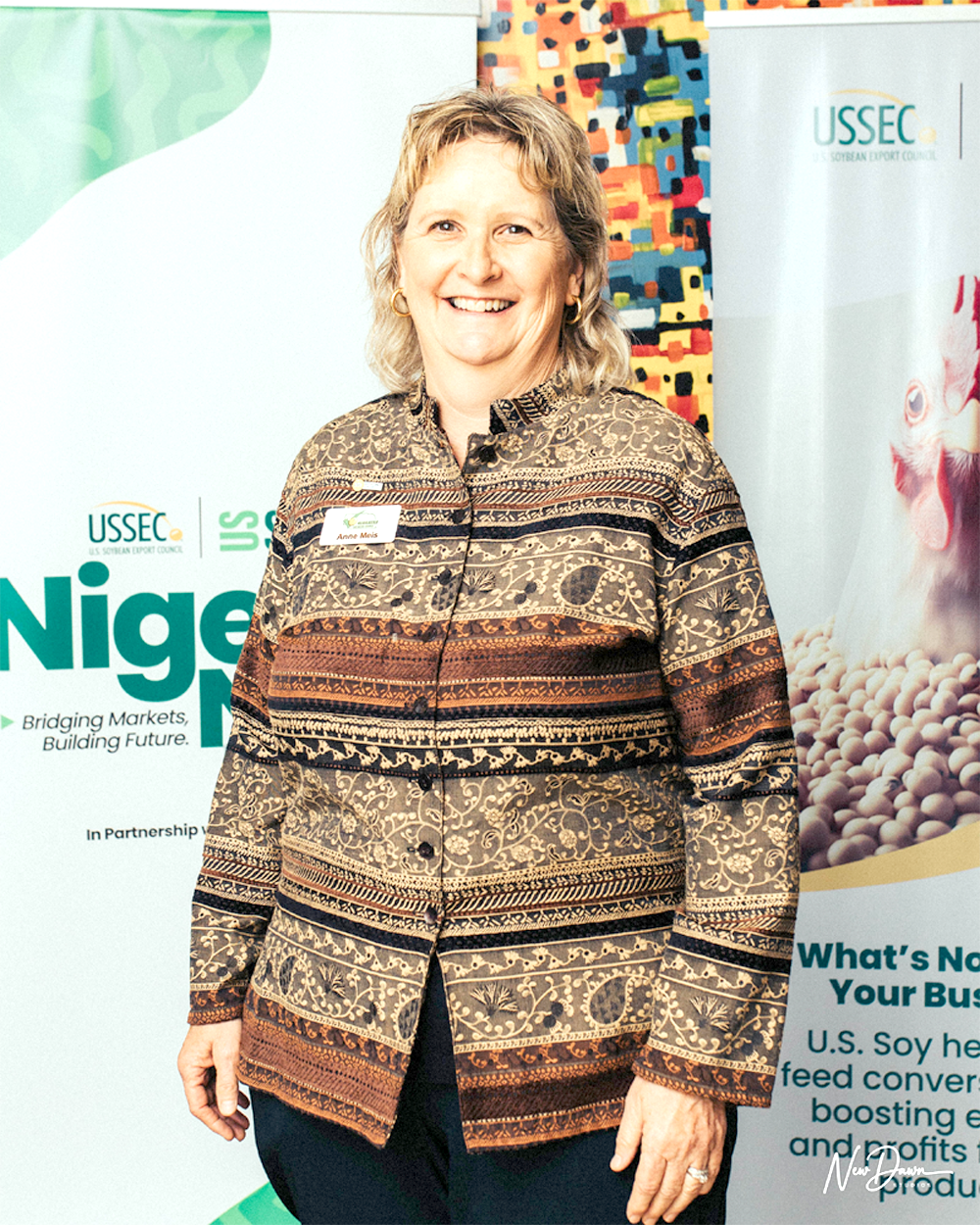
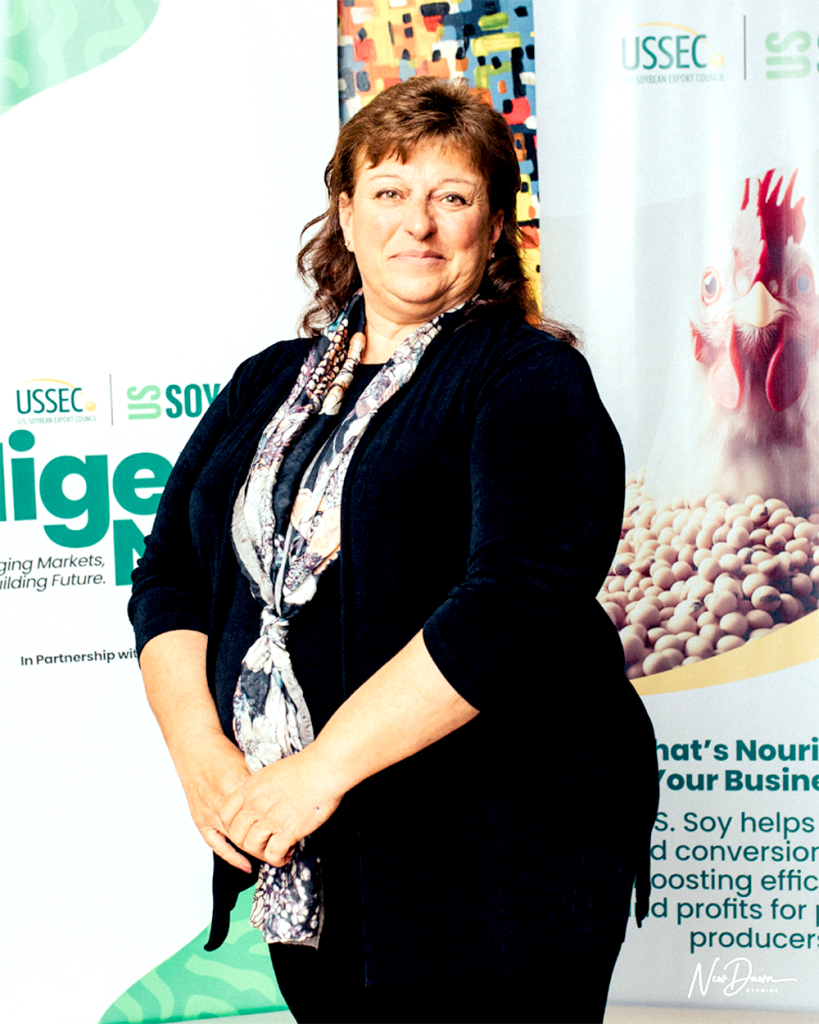
Anne Meis, Chair, Soy Excellence Center Global Advisory Panel, Nebraska, USA, at a media chat in Lagos, confirmed that USSEC free training in Nigeria has improved participants’ knowledge and increased productivity, and that is the reason they keep training industry practitioners in Nigeria.
Excerpts:
How has the Soy Excellence Center’s training improved operations, feed efficiency, and performance for Nigerian producers and millers?
The response to the Soy Excellence Centers in Nigeria has been excellent. We provide free training, starting with virtual courses accessible by phone. Participants take that knowledge back to feed mills and poultry farms and change practices immediately. This year alone, we had over 1,200 graduates.
Since the program started, more than 5,000 Nigerians have participated. At Dunn-Maid Farms, after the poultry course, they improved biosecurity, changed bird housing, and reduced mortality in chicks and adult birds. They also saw gains in litter quality, bird welfare, and overall productivity. On the feed mill side, after learning about full-fat soy, one mill increased pellet production by 15-20% while reducing costs by 10% through better efficiency. They now hold monthly staff trainings, reaching 50 people a month with new ideas. Our surveys show 94% of graduates report stronger job skills, and 93% say their companies are more profitable.
What is the objective of USSEC’s training and conference for Nigerian farmers?
We’re here to support Nigeria’s livestock industry. Nigeria has good soy production, but as the population and the economy grow, you’ll need more protein. We want to be here when that transition happens—when feed mills and poultry farms need more soy. We want Nigerian buyers to prefer U.S. Soy in that competitive market. We established the Soy Excellence Center to build long-term relationships with current and potential importers. This is a win-win for the U.S. and Nigeria.
From your global perspective, what pieces of advice would you give Nigerian protein producers to improve productivity, profitability, and bridge the protein gap?
The Soy Excellence Center exists to share knowledge. Twenty years ago, Egypt bought 400,000–500,000 tons of U.S. Soy. Today it’s 4 million tons. We worked with that industry for years. Both sides benefited. We want the same win-win with Nigeria. Our focus is workforce training—supporting people on the ground in feed mills and poultry houses, not just CEOs. If we build that technical base, we can support local protein production now and U.S. Soy consumption long-term. My advice as a farmer: protect your land and resources. Nigerian producers are already exploring technology and innovation. Keep doing that, and you’ll be on the right path.