Akwa Ibom Government says it has cleared all inherited bank debts totalling N39.83 billion including the principal and interest.The Commissioner for Finance, Mr Emem Bob, disclosed this at the state government’s monthly press briefing in Uyo on Monday. Bob further said that as at Dec. 2025, the Gov. Umo Eno-led government had reduced inherited gratuity backlog to retirees from N110 billion to N80 billion. He said that as at June 2025, the state’s investment portfolio had grown from N6 billion to N10 billion with recorded returns of N260.65 million.The commissioner said that the government had continued to ensure prompt payment of salaries and pensions across all ministries, departments and agencies.Bob stated that fiscal reforms had been extended to debt management, procurement, and verification exercises. He said that staff and pensioners verification exercises eliminated no fewer than 3,000 ghost workers, and created opportunities for new employments.“Public procurement processes are now audited and aligned with accepted standards, while capacity-building programmes have been conducted for staff to ensure sustainable procurement.“Full implementation of the Treasury Single Account (TSA) has ensured that all internally generated revenue from MDAs flows through the AkwaRemit Platform into the state TSA. “This is to provide a reliable base for funding government programmes, including the ARISE Agenda,” Bob said.He said that N321.8 million had been disbursed as staff housing loans to 212 civil servants within the period. The commissioner said that repayment of Afrexim credit to Ibom Power had continued on a quarterly basis.According to him, adherence to budget discipline has improved performance, with over 85 per cent of the budget implemented a in line with plans. He said that contractors for both inherited and ongoing projects were being paid promptly.“The financial management landscape of the state has been repositioned to continue the sourcing, custody, and funding of ARISE Agenda programmes and other activities,” he said.The commissioner for Information, Dr Aniekan Umanah, said that the free food distribution programme of the state government had reached 500,000 vulnerable households within the period. Umanah said that the free food distribution to households would resume from April to strengthen food security, and reinforce the administration’s commitment to social protection.He said that within the period, more than 1,200 kilometres of roads had been constructed and 32 bridges, either delivered or ongoing. The commissioner said that institutional and financial governance in the state had been strengthened, through the approval and implementation of the TSA
A’Ibom Govt. clears N39.83bn debt, settles N80bn gratuity arrears
by  Emeka Moses
Emeka Moses 


Latest from News

The Person on the Other End of the Line
This Customer Service Week, the extra mile starts with something simpler: making sure that when a customer, caller, or visitor needs a human being, one is there. By Olufunmilola ‘Funmie’ Aluko | Customer Experience Leader | Chief Brand and Marketing Officer/ Head,
Interswitch TechConnect 6.0 Drives Cross-Country Conversation on the Future of Financial Infrastructure
Interswitch, one of Africa’s leading integrated payments and digital commerce companies, is taking the sixth edition of its TechConnect industry engagement series across four Nigerian cities. The series brings together leaders and stakeholders from government, financial services, technology and business to examine
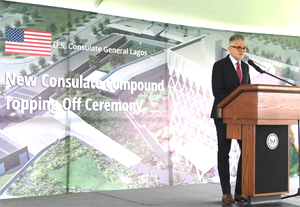
U.S. Celebrates Key Construction Milestone at New Consulate Compound in Eko Atlantic City
Photo 001: U.S. Deputy Assistant Secretary of State for West Africa and for Public Diplomacy Richard Michaels delivering remarks at the Topping Off Ceremony of the New Consulate Compound at Eko Atlantic City in Lagos. Photo 002: (L-R): U.S. Consul General Brandon

No Customers, No Brand! – John Kokome
In business, a dangerous illusion is that companies build brands on their own. They choose the name, design the logo, create the campaign, buy the media space and announce to the world what they stand for. But the market has the final
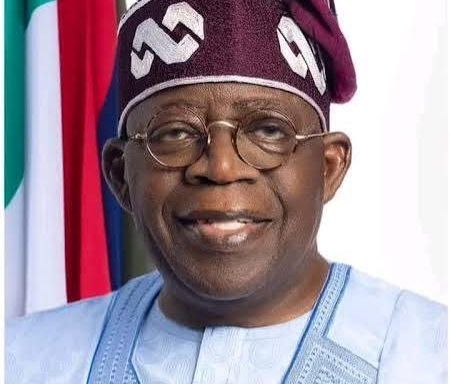
KILLINGS: More than 1,000 northern Islamic clerics tell Tinubu
Over 1,000 northern Islamic clerics have told President Bola Tinubu to drop his 2027 re-election ambition, citing killings, kidnappings and acts of terrorism across the country, particularly in the North-West. The demand was contained in a communique issued at the end of