
 Emeka Moses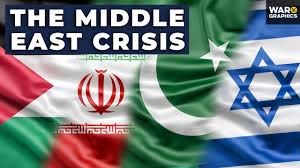
An expert, Mr Joe Nwakwue, has urged the Federal Government to adopt a proactive, structured strategy to address Nigeria’s economic challenges amid global uncertainty.
Nwakwue, Chief Executive Officer of Zera Advisory and Consulting Ltd., warned that the Middle-East crisis threatened Nigeria’s economy and demands urgent action.
Nwakwue said Nigeria must define clear intervention thresholds to shield the economy from shockwaves of the deepening Middle-East crisis. He warned that tensions were posing “substantial challenges to the global market order” by disrupting supply chains and raising essential commodity costs.
According to him, ripple effects are evident in rising global prices, with Nigeria particularly exposed due to structural vulnerabilities.
“The Middle-East crisis is not just a regional issue; it is a global economic disruptor. Supply dislocations are translating into higher prices across markets, and Nigeria is no exception,” he said.
Nwakwue said Nigeria’s heavy reliance on petroleum products for transport and industry leaves it vulnerable during global shocks.
“Given our reliance on petroleum products, sustained global price increases will raise transport and manufacturing costs domestically. This creates higher logistics costs, increased production expenses, and inflationary pressure on consumers,” he said.
He stressed that without a clear response framework, the economic impact could deepen, eroding purchasing power and slowing growth. To mitigate risks, he urged the Federal Government to adopt a proactive and structured intervention strategy.
He said this must go beyond ad hoc measures and focus on clearly defined economic triggers and policy objectives.
“Government must determine price thresholds for intervention, its objectives, mechanisms, and when measures will be phased out,” he said.
He warned that poorly designed or open-ended interventions could distort markets and strain public finances if not carefully managed.
Nwakwue highlighted the “naira-for-crude” mechanism as a viable option to cushion the economy against foreign exchange volatility.
“The naira-for-crude framework offers a practical pathway among alternatives. It can stabilise domestic pricing and ease pressure on foreign reserves within a disciplined policy structure,” he explained.
He said the crisis presents an opportunity for Nigeria to rethink long-standing energy and economic dependencies.