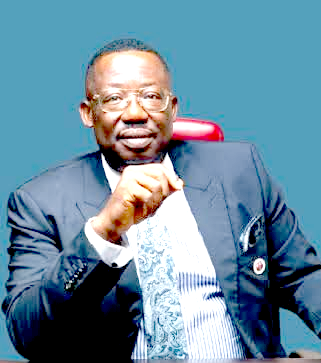
Oye said the size of the capital inflow should not be mistaken for evidence that the Nigerian economy is attracting sufficient long-term productive investment.
Oye, who was reacting to the United States Federal Reserve’s interest rates raise for the first time in more than three years, to 3.75–4.00 percent, noted that the dominance of portfolio investment in the inflow points to a deeper challenge, as such funds can move quickly in response to changes in interest rates, exchange rates and investor sentiment.
On the interest rate raise, Oye said any further interest-rate hike by the United States Federal Reserve would be a major test of the strength of Nigeria’s $54.61 billion foreign exchange reserves and the stability of the naira market.
He noted that the impact of tighter monetary conditions in the United States could be felt across emerging markets as investors reassess the returns and risks associated with holding assets in countries such as Nigeria.
He said Nigeria’s ability to retain foreign capital and maintain stability in the foreign exchange market would depend partly on the resilience of its external reserves and the confidence of investors in the country’s economic reforms.
According to him, the level of Nigeria’s reserves provides an important buffer, but the real test is whether the country can withstand renewed pressure on the naira without significant depletion of its external buffers.
Oye said policymakers must therefore closely monitor capital flows, foreign exchange demand and global interest-rate movements while ensuring that the country’s reserves are used strategically.
He also stressed the need to strengthen non-oil exports and attract more stable foreign direct investment as part of efforts to reduce Nigeria’s vulnerability to external shocks.
Oye said the focus should be on building an economy capable of generating sufficient foreign exchange through production and exports rather than relying excessively on volatile portfolio flows.
On Nigeria’s $10.37bn capital Inflow, Oye said the country needs to attract more foreign direct investment (FDI) capable of establishing businesses, expanding production, creating jobs and strengthening the country’s productive capacity.
Oye noted that while the $10.37 billion capital inflow was significant, what matters more is how much of the money is going into productive activities that can generate sustainable economic growth.
He said an economy cannot achieve broad-based growth simply by recording large capital inflows if the investment does not translate into increased production, employment, and infrastructure and improved living standards.
The AERE chairman said Nigeria must therefore focus on creating an environment that encourages long-term investors to commit capital to manufacturing, agriculture, technology, infrastructure and other productive sectors.
He identified policy stability, infrastructure, regulatory certainty and a reduction in the cost of doing business as critical factors in attracting sustainable FDI.
Oye said Nigeria’s economic reforms should ultimately be measured by their impact on businesses and households, particularly through increased investment, job creation, higher production and improved purchasing power.
Oye said stronger FDI would provide a more sustainable foundation for economic expansion than excessive dependence on portfolio flows, which are more sensitive to market conditions.
The statement reads: “The Federal Reserve’s increase is a yellow light for Nigeria, not a fire alarm. It means dollars may become more expensive, global investors may become more selective, and Nigeria will have to prove, again that its reforms are real, predictable, and useful beyond the trading screen.
“On 16 September 2026, the Federal Open Market Committee raised its target range by 25 basis points to 3.75–4.00%. A further increase is possible, but it is not guaranteed. The Fed’s projections are a weather forecast, not a wedding vow. Nigeria should prepare for tighter global financial conditions without writing its obituary in advance.