 Emeka Moses
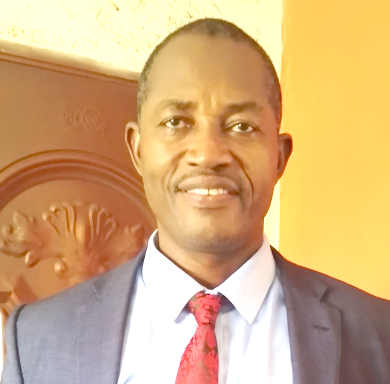
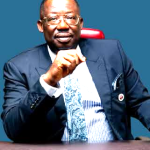
Solomon Nkwagu is the Head of Corporate Communication and Visitors’ Services at
the Yemisi Shyllon Museum of Art (YSMA), Pan-Atlantic University, Lagos.
His work at the museum sits at the intersection of communication, marketing, public engagement and project management, with particular interest in how museums can create meaningful experiences for different audiences.
Nkwagu joined YSMA in 2019, when the museum was established, and since then he has been involved in developing programmes and partnerships that connect the museum with students, schools, artists, communities and other institutions.
In this interview, Nkwagu spoke on the recent partnership of the YSMA and Art for Health Initiative and two day workshop. Excerpts:
Can you tell us what informed the two-day workshop organised at PAU on Art for Health Initiative?
The idea came from a desire to explore a question that we had not really addressed at YSMA before. What happens when you deliberately bring art into conversation with health, particularly mental health? The Art for Health Initiative approached YSMA with the concept of the Health Story Lab: “What We Carry – Stories of Mental Health and Resilience.” The premise was very interesting to us because it recognised that art is not only something we look at or display in a museum. Art can also be a way of processing experiences, communicating difficult ideas, encouraging empathy and starting conversations around issues that affect people’s lives.
We therefore saw an opportunity to create an interdisciplinary experience where young artists could engage with public health and mental health professionals, reflect on the issues discussed, encounter artworks in the museum and then think about how they could translate those ideas into their own creative practice.
The two-day workshop, which held in October ultimately brought together 25 Art students from the Yaba College of Technology Epe Annex. The programme moved from public health and mental health conversations on the first day to artistic expression, a curated museum tour and the development of creative concepts on the second day.
For YSMA, this was particularly significant because it was our first initiative specifically exploring health through art.
What message or knowledge was passed to participants, especially those young artists?
One of the biggest lessons was that art can communicate things that conventional forms of communication sometimes struggle to express.
The students were exposed to perspectives on public health, mental health, resilience and emotional wellbeing. Also, we wanted them to think beyond simply receiving information. We wanted them to ask: How can I use what I know as an artist to communicate this to somebody else?
The session with the psychiatrist, Dr Emmanuel Abayomi, was particularly impactful. It created a space where the students could think and talk about mental health in a way that was accessible and relatable to them. You could almost see a shift in how some of them began to think about their own creative possibilities.
They began to understand that an artwork can carry a story, a question, a feeling or an experience that another person can connect with. A young artist can therefore create work that helps another young person recognise something they are going through, feel less alone, begin a conversation or even seek appropriate help.
We also wanted them to understand that when you deal with sensitive subjects such as mental health, creativity must be accompanied by responsibility. You have to think about stigma, stereotypes, privacy and how you represent other people’s experiences.
Ultimately, we wanted the students to leave with the understanding that their art can have both aesthetic and social value. It can be beautiful, but it can also make people think, feel, question and engage with issues that matter.
How can our youths tap into this initiative?
The first thing is to recognise that opportunities like this require young people to be intentional about developing their skills and building their networks.
The Health Story Lab was designed around the idea that young people can learn across disciplines. An artist does not have to remain within the traditional boundaries of the art world. There are opportunities at the intersection of art, health, education, technology, media, communication and social development.
Young people should therefore pay attention to programmes, workshops, residencies, exhibitions, open calls and collaborations offered by museums, cultural organisations, universities, foundations and creative institutions. They should also document their work and build a portfolio. Sometimes the opportunity is not simply about what you can create today; it is about being able to demonstrate what you have been creating and what you are capable of doing.
At YSMA, we are interested in creating more opportunities for young people to encounter art differently and to see the museum as a place where they can learn, experiment, ask questions and develop ideas.
This particular programme will also have a continuation beyond the workshop. The participating students are developing artworks inspired by their experience, and these works will form part of a micro-exhibition in Lagos in November, with the exact date to be announced.
How can our young talented people harness this opportunity to make money?
I think the first step is to move from seeing creativity only as a talent to seeing it as a professional and economic asset.
There are opportunities for artists beyond simply producing a painting and waiting for somebody to buy it. An artist can work in illustration, animation, editorial content, advertising, branding, film, publishing, digital media, education, cultural programming, public art, commissions and collaborations with organisations working in different sectors.
And initiatives such as this show another possibility: specialisation at the intersection of disciplines. An artist who understands health communication, for example, can potentially work with health organisations, NGOs, public institutions, media organisations or development agencies to create campaigns, visual stories,
educational materials and other creative outputs.
But young artists also need to understand the business side of creativity. They need to learn how to price their work, negotiate commissions, protect their intellectual property, present themselves professionally, build a strong portfolio and use digital platforms to reach audiences beyond their immediate environment.
So, yes, art can become a source of income—but I would encourage young people not to approach it simply from the perspective of “How do I sell this artwork?” They should also ask, “What problem can my creative skill solve, what audience can I serve, and what value can I create?” That is where the bigger opportunities begin.