The Chairman of the National Tax Policy Implementation Committee (NTPIC), Joseph Tegbe, has stressed that tax policy must serve as an enabler of governance.He stated that the framework must embody simplicity, equity, predictability, and administrability at scale. These principles, he explained, foster voluntary compliance, reduce operational friction, and strengthen investor confidence.By contrast, ad-hoc adjustments or policy drift, Tegbe warned, could undermine reform momentum, unsettle businesses, and deter investment, which thrives on predictable rules rather than shifting announcements. “Structured sequencing, clear transition mechanisms, and continuous feedback between policymakers and administrators are therefore critical to sustaining reform credibility,” he said.The NTPIC Chairman made this known while emphasising that the success of Nigeria’s recently enacted tax reform framework will rely less on the ambition of its legislation and more on the discipline of its execution.This was at the 2026 Leadership Retreat of the Nigeria Revenue Service (NRS), where Tegbe underscored that the country’s tax reform journey is at a critical juncture where effective implementation will determine long-term fiscal outcomes.He pointed out that the country’s tax-to-GDP ratio remains among the lowest for major economies, constraining fiscal flexibility and heightening vulnerability to fluctuations in oil prices. With public expenditure pressures rising and macroeconomic stability increasingly dependent on sustainable domestic revenue mobilisation, he argued that institutional performance is now the primary driver of fiscal resilience.According to him, the passage of four new tax laws marks only the beginning of a broader reform agenda. He described the initiative as a systemic recalibration of Nigeria’s fiscal architecture, rather than a routine policy update.The true measure of success, he asserted, will be the credibility of implementation, not the design of the laws themselves, and argued that revenue reform cannot succeed in isolation. “Achieving sustainable gains requires a whole-of-government approach, leveraging robust taxpayer identification systems, integrated financial data, efficient dispute resolution, and harmonized coordination across federal and subnational levels,” he stated.This approach, he said, reduces leakages, eliminates multiple taxation, and reinforces confidence in the system.He added that durable reform should be measured by higher voluntary compliance rates, lower administrative costs, fewer disputes, faster resolution cycles, and stronger taxpayer confidence.
Chairman, National Tax Policy Implementation Committee highlights tax policy as enabler of governance
by  Emeka Moses
Emeka Moses 



Latest from Business

Fidelity Bank celebrates beauty industry excellence at Beauty in the Motherland dinner
Managing Director/Chief Executive Officer, Fidelity Bank Plc, Nneka Onyeali-Ikpe (middle), receiving a special recognition award for her leadership and Fidelity Bank’s contribution to Nigeria’s beauty enterprise ecosystem during a dinner commemorating the Beauty in the Motherland 2026 exhibition in Lagos recently. She

How Nigerians Abroad Can Grow Wealth at Home
A Nigerian professional in London closes her laptop after another workday. In Toronto, a family reviews its financial plans for the next few years. In Houston, an entrepreneur considers what to do with money set aside for a future commitment in Nigeria.
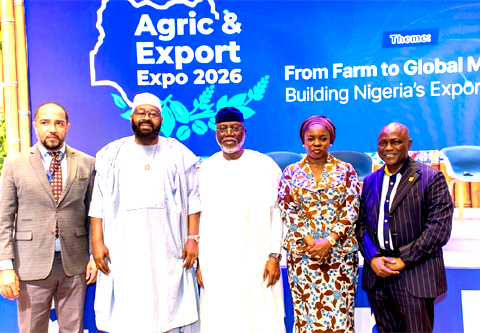
FirstBank Agric & Export Expo 2026 calls for investment, collaboration of regulators, policymakers, stakeholders to promote sector
Nigeria’s non-oil and agricultural export sectors remain critical drivers of economic growth, diversification and sustainable job creation. With the right investments, partnerships and policy support, both sectors possess significant potential to strengthen the country’s competitiveness in global markets. Initiatives such as the

FUNAAB Takes Centre Stage as Bigi, Fearless Bring Soundcity OnTour to Abeokuta
Three days of music, dance, talent discovery, and a ₦1 million BIGI Music prize are set to transform campus life as Soundcity OnTour arrives at FUNAAB. The Federal University of Agriculture, Abeokuta (FUNAAB), is set to come alive from 7 to

Nigeria’s SMEs: Resilient, Essential and in need of the Right Partners
Nigeria’s micro, small and medium sized enterprises remain central to the country’s economic growth, employment and household incomes. According to the NBS and SMEDAN MSME 2021 survey, as cited in PwC Nigeria’s MSME Survey 2024, MSMEs account for 96.9 per cent of